

RETAIL BUILT TO SCALE
Retail & Brand Experience Leader
Retail Strategy | Visual Merchandising | Displays | Packaging | Experiential Design | Creative Leadership

Chuck Godfrey
I have always been fascinated by what ideas can become when they are built with purpose.
I translate brand strategy, customer needs and business priorities into physical experiences that connect people with products and brands.
My work spans retail environments, visual merchandising, fixtures, displays, packaging, experiential activations and branded spaces. I lead the complete journey from strategy and creative direction through design, engineering, production and in-market execution.
With an Industrial Design foundation and more than 20 years across retail, consumer products, technology, beauty, lifestyle, food & beverage and entertainment, I bring together the disciplines required to turn ambitious ideas into scalable experiences that perform in the real world.
20+ Years Retail Leadership
100+ CONSUMER Brands
50+ Enterprise Programs
6 Retail Channels
PHYSICAL BRAND EXPERIENCE
More Than a Fixture. More Than Packaging. More Than an Environment.
A customer rarely experiences a brand through a single touchpoint.
They encounter packaging. Product presentation. Fixtures. Graphics. Signage. Digital content. Associates. Environments. Events. Displays. Product education.
The opportunity is to make those interactions feel like…
ONE BRAND EXPERIENCE
I am drawn to the point where the big idea meets reality. I work across these connections to turn strategy into cohesive physical systems that strengthen brand expression, improve product discovery and give internal teams, vendors and retail partners a clear framework for execution and growth.
HOW I LEAD
I am at my best when the challenge is complex, expectations are high and the outcome matters. My approach is simple: raise the bar, organize the moving parts, improve what is not working and stay close enough to the work to make sure the idea gets delivered.
Build the Experience
Translate brand strategy, product stories and customer needs into compelling physical experiences across retail environments, visual merchandising, packaging, fixtures and activations.
Build the System
Create scalable visual standards, merchandising frameworks, design systems and production tools that allow great ideas to remain consistent across channels, locations and touchpoints.
Improve the Organization
Build stronger teams, processes and cross-functional relationships that increase creative capacity, accelerate development and improve execution quality.
Deliver the Work
Connect creative direction with engineering, sourcing, fabrication, manufacturing, vendors and retail operations to move concepts successfully from strategy into the physical world.
Build with purpose.
Improve what can be better.
Deliver work that lasts beyond the launch.
LEADERSHIP IMPACT
Creative Leadership With Business Results
100+ Global Brands
Retail, merchandising, packaging and physical brand experience programs across technology, beauty, consumer products, sporting goods, food & beverage, entertainment and lifestyle.
500% Greater Creative Capacity
Expanded organizational creative output through scalable systems, standards, workflows and team development.
37% Faster Development
Reduced design-to-production timelines through better planning, cross-functional collaboration and production processes.
5X Business Growth Supported
Helped scale an organization from approximately $5M to $25M while expanding its creative, retail and production capabilities.
Strategy Through Execution
Reduction in design-to-production timelines through improved planning, collaboration and workflow optimization.

URBAN ARMOR GEAR
Case Study
Building a Scalable Consumer Electronics Merchandising System
Retail Strategy | Visual Merchandising | Permanent Fixtures | Packaging | Product Education
INTRODUCTION
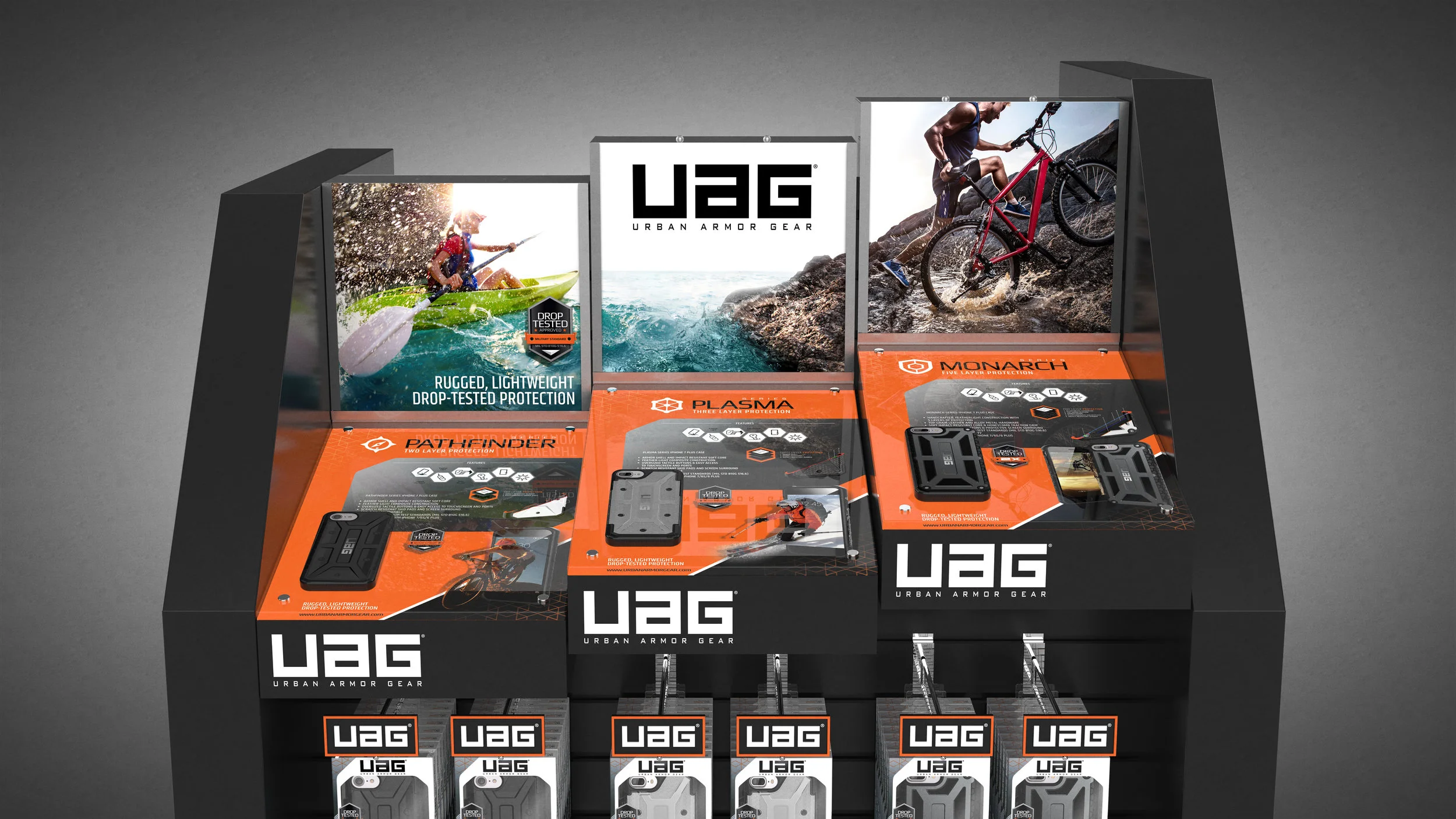
Urban Armor Gear required more than an individual retail display. The opportunity was to create an integrated merchandising system that could organize a growing technology accessory portfolio, communicate product benefits and establish a consistent UAG brand experience across multiple retail touchpoints.
I developed the program as a connected physical ecosystem spanning permanent fixtures, accessory merchandising, branded graphics, packaging, product education and production documentation. Each component had a different function, but together they needed to operate as one recognizable retail experience.
BUSINESS CHALLENGE
UAG products combine device compatibility, protection, technical features and distinctive industrial styling. In a busy consumer electronics environment, customers needed to quickly understand which products were relevant to their device and what differentiated one solution from another.
The challenge was therefore larger than creating an attention-getting fixture. The merchandising system needed to organize a complex accessory assortment while maintaining strong brand presence and supporting the practical realities of retail including product access, replenishment, graphic updates and changing product assortments.
STRATEGIC OBJECTIVE
Create a flexible merchandising architecture that translated UAG's brand and product strategy into a clear, repeatable physical shopping experience.
The system needed to establish hierarchy, simplify product selection and create enough consistency that permanent displays, hanging accessories, packaging, graphics and product education felt like parts of one program rather than separate executions.
The goal was to build both the experience customers encountered and the system required to consistently execute it.
CUSTOMER EXPERIENCE
See > Orient > Understand > Compare > Select
The customer experience was structured around the natural decision-making process of shopping for technology accessories.
From a distance, strong UAG branding and product imagery created recognition and drew shoppers toward the display. At the fixture, product organization helped customers orient themselves around compatible devices and available solutions.
Graphics and packaging then communicated protection, features and product differentiation at the point where that information became relevant.
The objective was not to give shoppers more information. It was to organize information so customers could find…
…The RIGHT INFORMATIOn,
AT THE RIGHT POINT IN THE PURCHASE DECISION.
MERCHANDISING SYSTEM
The program connected multiple customer-facing components into one coordinated merchandising ecosystem.
Permanent Floor Fixtures
Two-sided permanent displays created the primary UAG branded destination and combined product merchandising, product education, lifestyle imagery and brand communication within a compact retail footprint.
Accessory Merchandising
Custom branded slatwall hooks extended the merchandising language beyond the primary fixture and integrated UAG products into existing retail environments.
Packaging
Packaging carried brand recognition, product identification and key information directly to the individual SKU while maintaining continuity with the broader merchandising system.
Graphics + Product Education
Branded graphics established visual hierarchy, reinforced UAG's rugged product positioning and helped customers understand product benefits and differences within the assortment.
Together, these elements created…
…a MERCHANDISING ARCHITECTURE,
RATHER THAN A COLLECTION OF INDIVIDUAL DISPLAYS.
CROSS-FUNCTIONAL LEADERSHIP
I connected creative direction with the engineering and production requirements necessary to move the program from concept into retail.
That required balancing brand expression, product organization, ergonomics, shoppability, structural design, graphics, manufacturing requirements and customer approvals while collaborating across client, design, engineering and production teams.
Creative and production decisions were developed together rather than treating engineering and manufacturing as downstream handoffs. This helped ensure that the approved experience could be realistically built, assembled, merchandised and maintained in the retail environment.
EXECUTION & SCALE
The program moved from concept development and visualization through structural design, engineering, graphics, prototyping, production documentation and manufacturing.
Detailed design and assembly drawings defined construction, component relationships, material intent and assembly requirements. Production-ready documentation translated the approved creative direction into repeatable fabrication while supporting related executions including packaging, graphics and branded merchandising hardware.
The permanent fixture program was developed for consumer electronics retail environments in the United States and Thailand, demonstrating how the core merchandising strategy could translate across multiple markets while maintaining a consistent UAG brand experience.
PROGRAM IMPACT
The program created an integrated merchandising architecture connecting permanent fixtures, accessory merchandising, packaging, graphics and product education within one recognizable physical brand system.
Rather than solving a single display requirement, the work established a repeatable framework that could support multiple products, merchandising formats and retail touchpoints while maintaining consistency between customer experience, brand expression and production execution.
Success Criteria
Created a stronger visual hierarchy across a complex technology accessory assortment
Connected fixtures, packaging, graphics and merchandising hardware into one cohesive retail system
Improved the customer's path from brand recognition to product understanding and selection
Developed production-ready solutions designed around real-world manufacturing, assembly and merchandising requirements
Extended a consistent UAG physical brand experience across multiple retail executions and international markets

DERMALOGICA
Case Study
Turning Product Education Into a Physical Brand Experience
Beauty | Experiential Retail | Packaging | Fixtures | Visual Merchandising
INTRODUCTION
Dermalogica presented an opportunity to make product education part of the physical brand experience.
The work extended beyond traditional product display. The retail environment needed to support discovery, consultation, demonstration and education while reinforcing the professional expertise behind the Dermalogica brand.
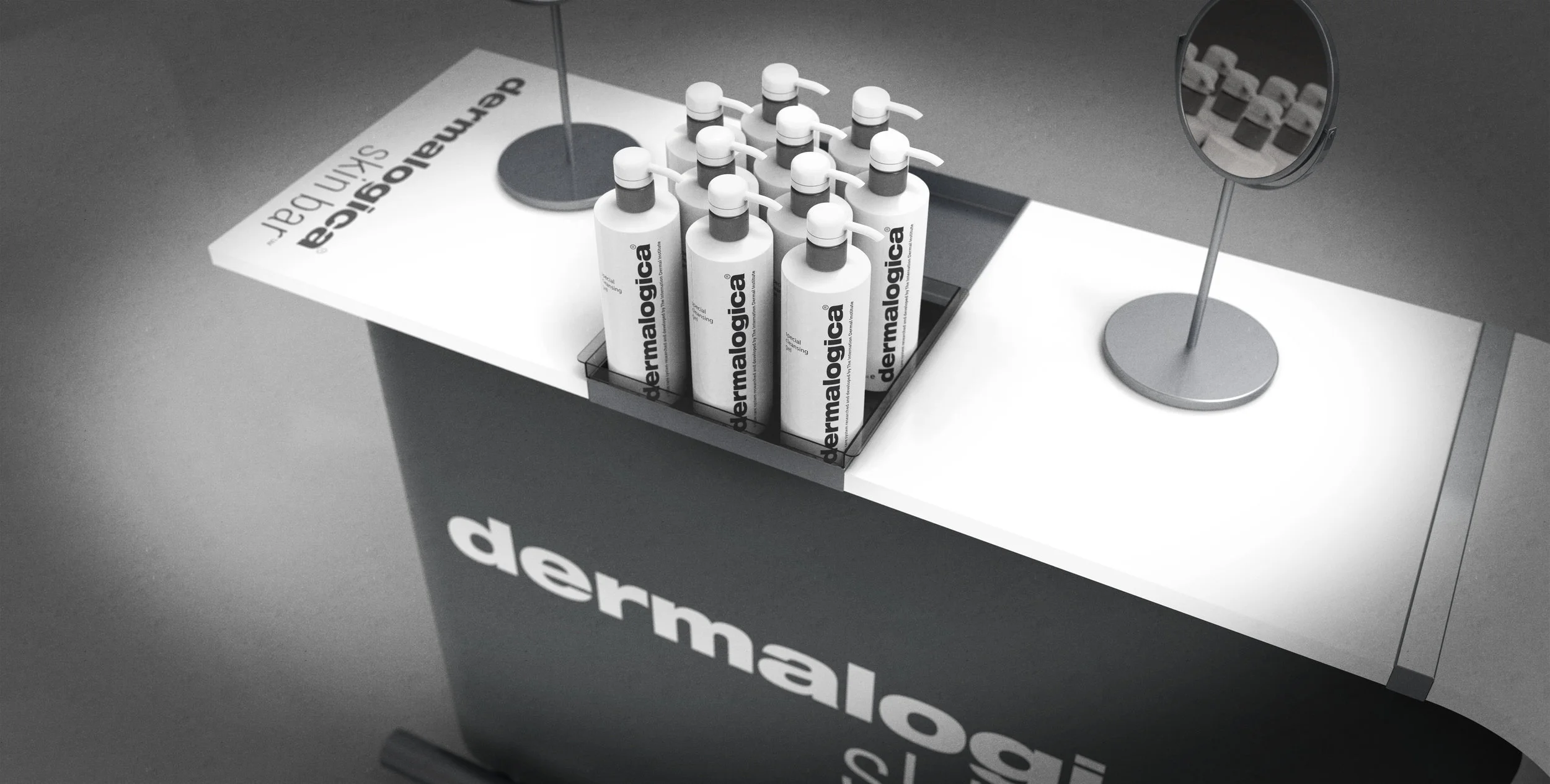
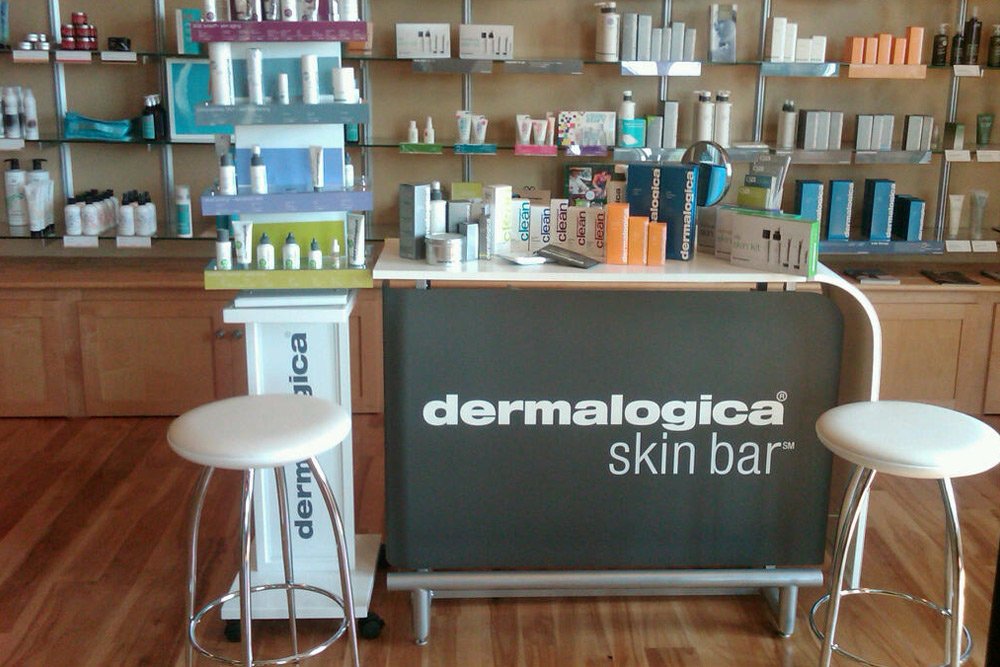
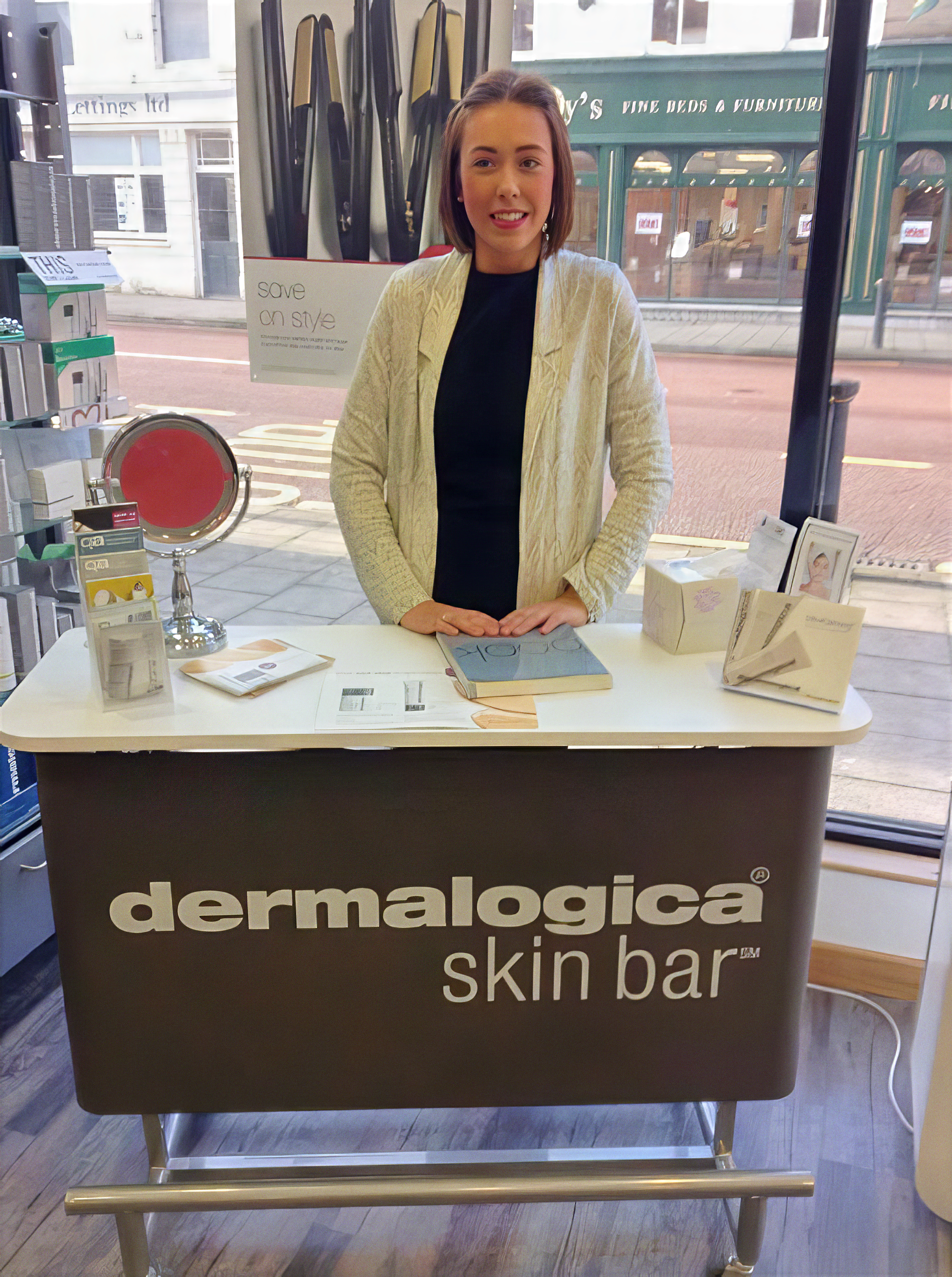
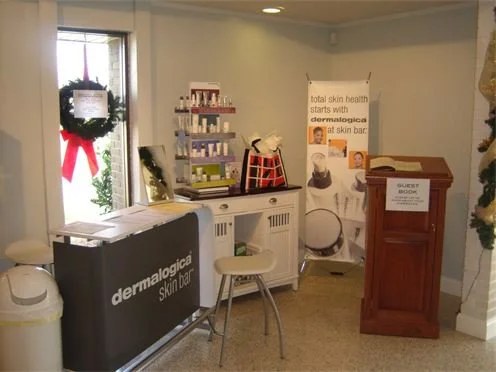
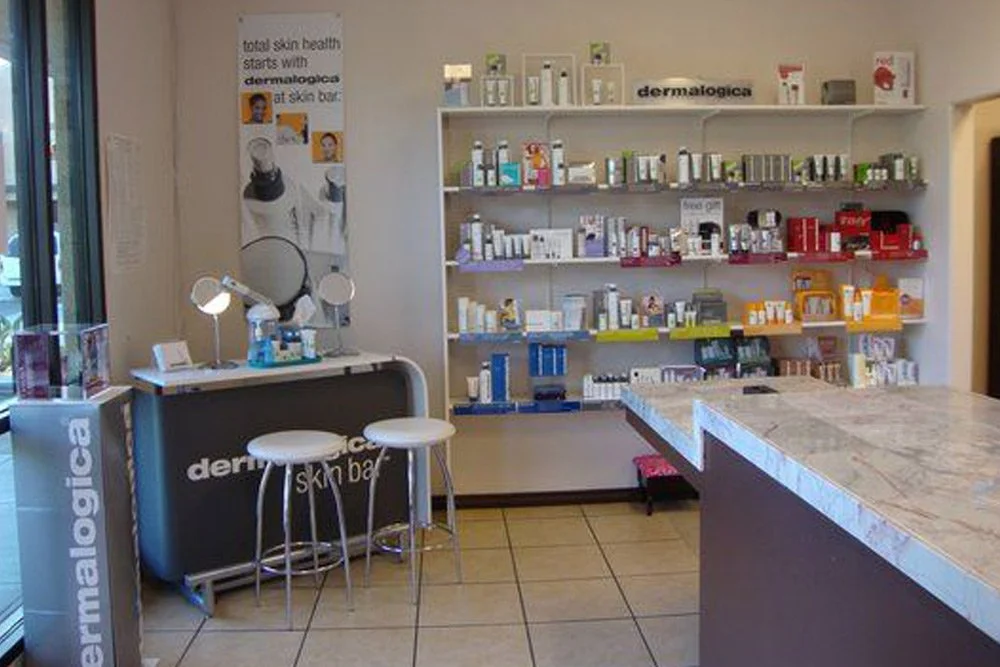
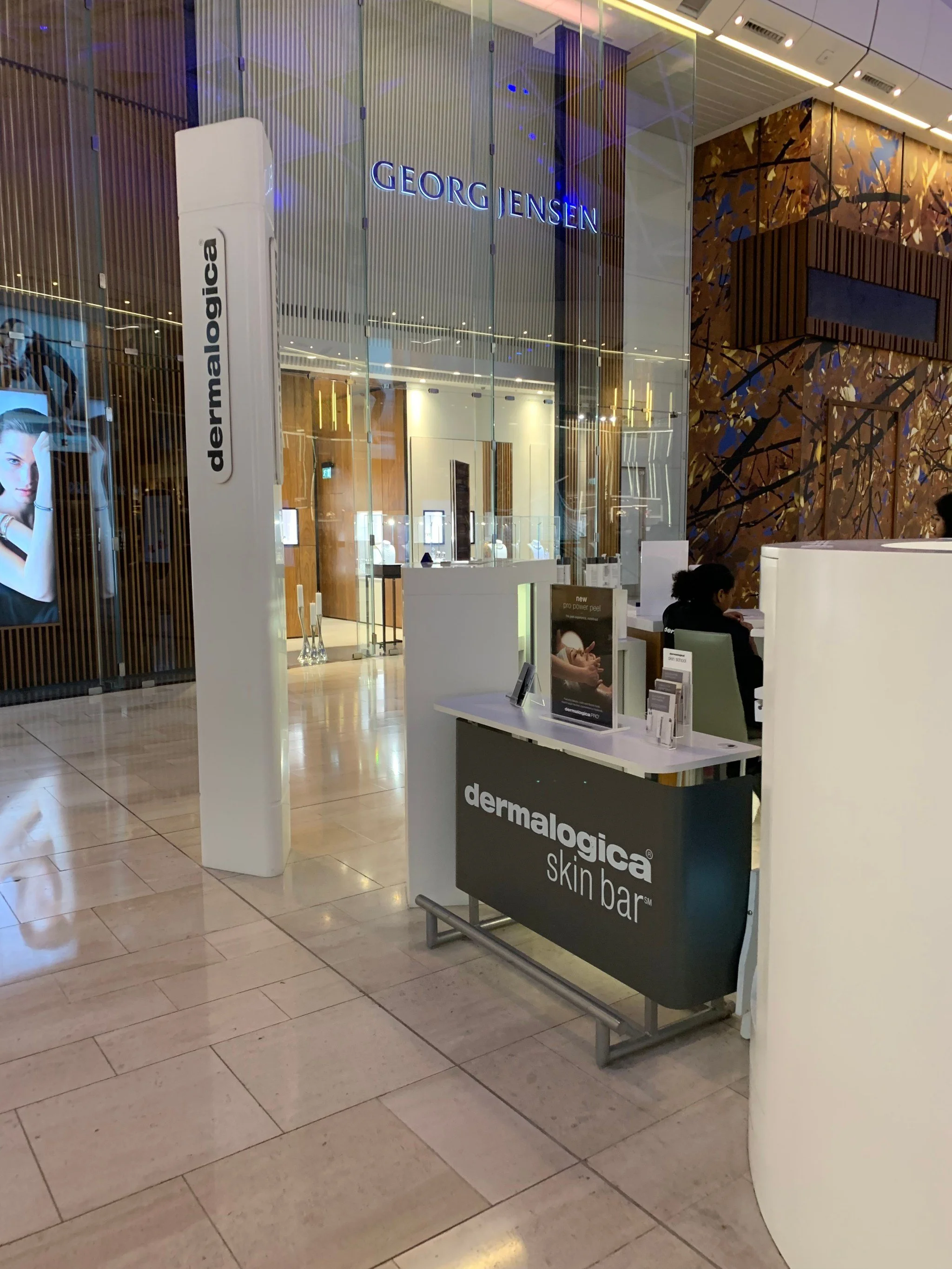
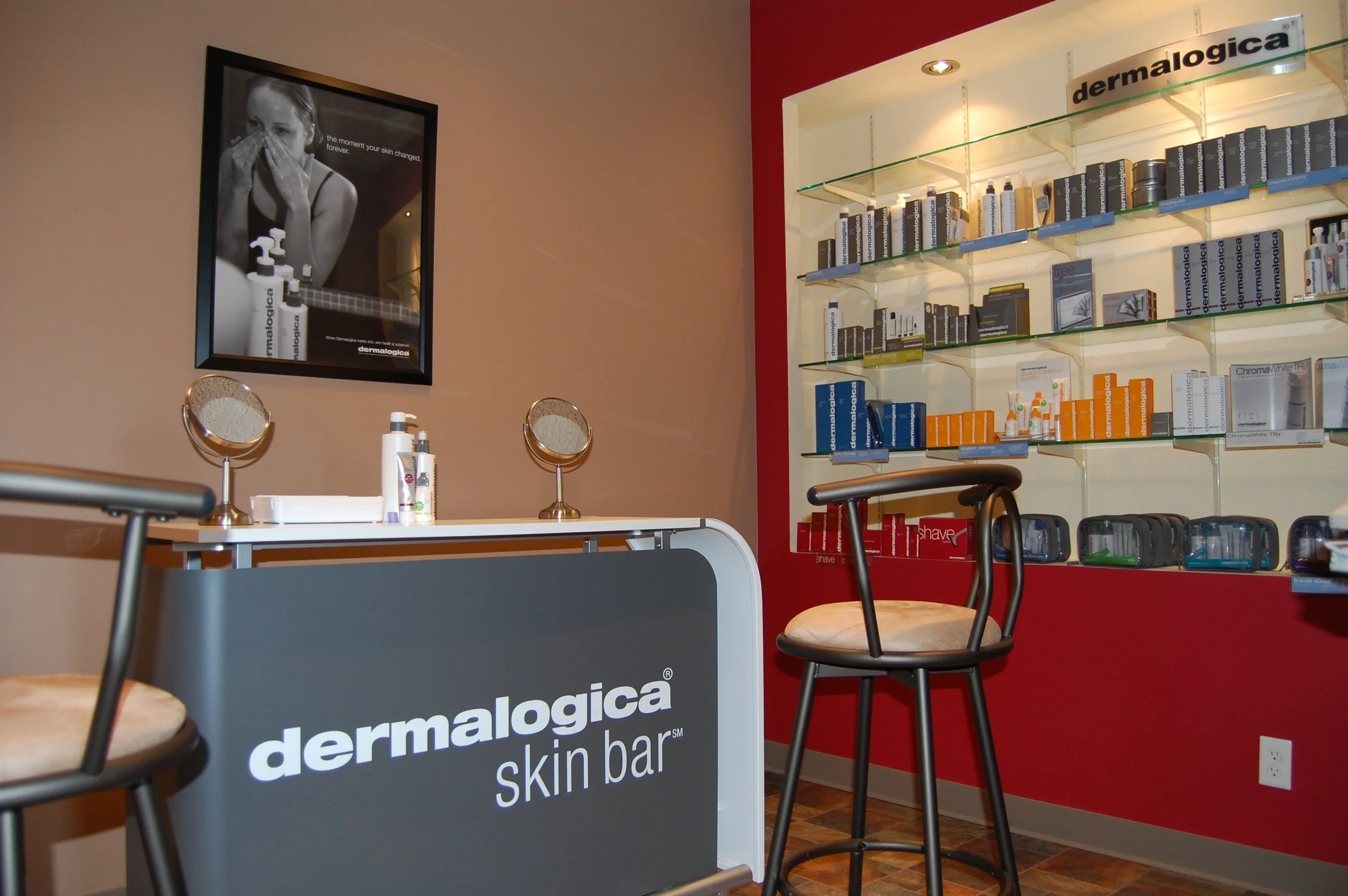
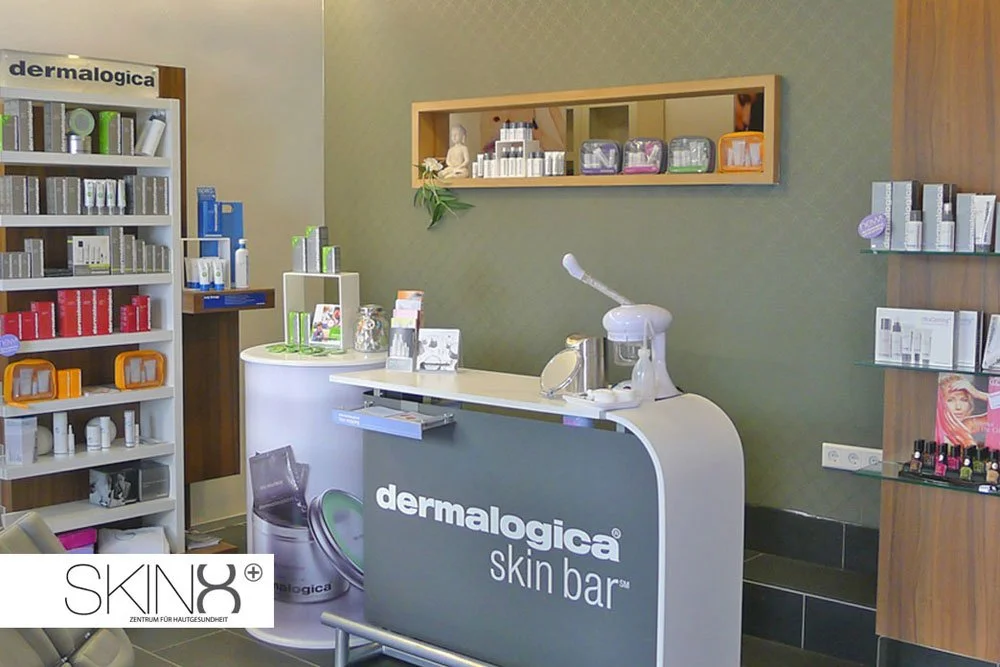
I developed an integrated group of beauty retail solutions spanning experiential fixtures, product presentation, packaging, merchandising and visualization. At the center of the program was the Skin Bar, a portable working environment designed around the interaction between Skin Specialists, customers and products.
BUSINESS CHALLENGE
Skincare is not always a self-explanatory purchase.
Customers may need help understanding product differences, application, regimen and which products are appropriate for their individual needs. Dermalogica's professional expertise gave the brand an important advantage, but the physical retail environment needed to help Skin Specialists translate that expertise into a meaningful customer experience.
The challenge was therefore larger than creating another beauty fixture.
The environment needed to present products clearly while providing specialists with a practical workspace for demonstration, consultation and customer interaction.
STRATEGIC OBJECTIVE
Create a physical retail experience that placed education and human interaction at the center of product discovery.
The objective was to connect the specialist, customer, products and brand within one flexible environment while maintaining the clean, professional visual language associated with Dermalogica.
Rather than separating merchandising from consultation, the strategy brought them together.
Customer Need > Specialist Interaction > Product Demonstration > Education > Product Discovery
The fixture became both a merchandising touchpoint and a working tool for delivering the Dermalogica brand experience.
CUSTOMER EXPERIENCE
Discover > Consult > Demonstrate > Understand > Select
The experience was designed around the way professional skincare recommendations naturally happen.
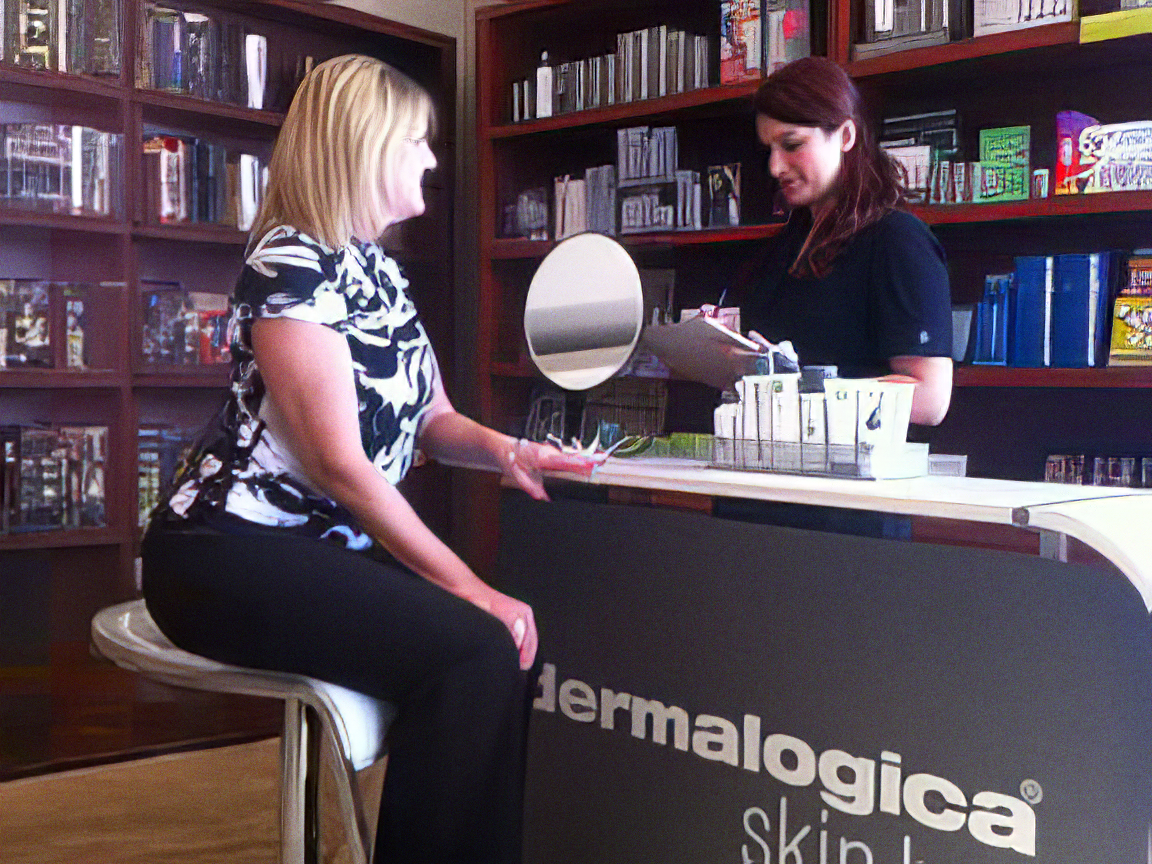
Customers first encounter the Dermalogica brand and product assortment. The Skin Bar then creates an invitation to engage with a Skin Specialist rather than simply browse products independently.
Products can be introduced, demonstrated and discussed within the same environment. The customer can experience the product while learning how it fits into a skincare routine and why it may be appropriate for their needs.
This transformed the fixture from a passive display into a platform for conversation, education and product discovery.
MERCHANDISING SYSTEM
The Dermalogica work connected several physical touchpoints into a broader beauty retail experience.
Skin Bar
A portable demonstration workspace created for Skin Specialists to interact with customers and demonstrate skincare products within retail and professional environments.
Product Organization
A custom injection-molded product insert nested within the fixture system to organize products and support the demonstration experience while maintaining a clean presentation.
Packaging
Packaging extended Dermalogica's visual identity to the individual product and reinforced the connection between the product customers experienced during consultation and the product they ultimately selected.
Retail Displays
Additional merchandising programs including the Dermalogica Shave display extended the brand into counter and product presentation applications beyond the Skin Bar.
Visualization
Realistic 3D renderings communicated the concept before production and provided imagery that could also support Dermalogica's digital presentation of the program.
Together, these elements created a connected system of product presentation, education and physical brand interaction rather than isolated design executions.
CROSS-FUNCTIONAL LEADERSHIP
I connected the customer experience and creative concept with the structural and production requirements necessary to make the fixture function in the real world.
That meant considering how Skin Specialists would actually use the workspace, how products would be organized, how customers would approach the fixture and how the design would transition from concept into a manufacturable solution.
Creative direction, structural design, product organization, ergonomics, materials, finishes, prototyping and production requirements were developed as parts of the same process.
The objective was not simply to design the appearance of the experience. It was to resolve how the experience would actually work.
EXECUTION & SCALE
The Skin Bar progressed through concept development, 3D visualization, structural design, prototyping, production documentation and manufacturing.
The development process included visualization of the overall fixture, detailed component relationships, an expandable and contractible working surface, custom product organization and production drawings required to translate the approved concept into a physical solution.
Prototypes allowed the fixture's operation, proportions and working surfaces to be evaluated before production. The completed design then progressed into production samples and real-world use.
This concept-to-production approach created a solution designed around both the customer experience and the practical requirements of manufacturing, transportation, setup and everyday use.
PROGRAM IMPACT
The Dermalogica program demonstrated how physical design can make brand expertise tangible.
Instead of relying solely on packaging, signage or traditional product displays to explain the assortment, the Skin Bar created an environment where customers could interact directly with products and knowledgeable specialists.
The broader program connected experiential retail, product presentation, packaging, fixtures and visualization around one central idea: helping customers better understand the products through experience.
Success Criteria
Turned product education into interaction by creating a dedicated environment for demonstration, consultation and discovery.
Supported Skin Specialist behavior with a functional workspace designed around products, tools and customer engagement.
Connected multiple brand touchpoints across fixtures, product organization, packaging, displays and visualization.
Balanced experience with execution by developing the concept through structural design, prototyping, documentation and production.
Extended Dermalogica's professional positioning by making expertise and product education visible within the physical retail experience.


BURT’S BEES
Case Study
TURNING BRAND STRATEGY INTO A REPEATABLE RETAIL SYSTEM
Visual Merchandising | Retail Displays | Brand Standards | Shopper Marketing
INTRODUCTION
Developed a coordinated retail merchandising program for Burt's Bees spanning permanent displays, countertop displays, endcaps, product merchandising and branded retail communication.
The work extended beyond individual displays into the development of a repeatable merchandising system designed to translate Burt's Bees distinctive natural brand positioning into a consistent physical retail experience.
A key component of the program was development of the next generation Burt's Bees brand book, creating a stronger connection between brand strategy, visual communication and the execution of consumer-facing retail environments.
BUSINESS CHALLENGE
Burt's Bees had a highly recognizable brand and expanding product portfolio that needed to remain consistent across multiple retail environments, fixture types and shopper touchpoints.
The challenge was not simply creating individual packaging & displays. It was establishing a flexible retail language that could accommodate different products, footprints and retailer requirements while preserving the visual character, accessibility and natural positioning associated with the Burt's Bees brand.
The system also needed to connect packaging, product communication, merchandising and physical displays into a unified shopper experience.
STRATEGIC OBJECTIVE
Create a recognizable and repeatable Burt's Bees retail experience that could translate the brand consistently across multiple merchandising formats.
The strategy focused on establishing common principles for structure, materials, color, graphics, product organization and brand communication so individual executions would feel connected even when their size, configuration or retail environment changed.
The next generation brand book helped formalize that thinking, extending the design strategy beyond individual projects into standards that could guide future retail communication and execution.
CUSTOMER EXPERIENCE
The retail experience was designed to help shoppers quickly recognize Burt's Bees, navigate the product assortment and understand individual products within a visually cohesive branded environment.
Packaging remained an important part of the experience. Fixtures and graphics supported rather than competed with the product, creating an organized presentation that allowed Burt's Bees distinctive packaging, ingredient-focused messaging and natural brand cues to remain prominent.
Across different display formats, the goal was to create a familiar visual experience that made the brand easier to recognize, explore and shop.
MERCHANDISING SYSTEM
The program developed a coordinated family of retail solutions rather than relying on a single display format.
Permanent displays, countertop units, endcaps and supporting merchandising elements shared common visual and structural principles while adapting to different product quantities, footprints and retail conditions.
Brand graphics, product organization, dimensional elements, materials and structural design worked together as components of one broader system. The approach allowed new executions to evolve without losing the recognizable characteristics of the Burt's Bees retail experience.
The brand book further codified these principles, providing a framework for maintaining consistency as the retail program expanded.
CROSS-FUNCTIONAL LEADERSHIP
The program required alignment across brand strategy, creative development, merchandising, structural design, graphics, production requirements and retail execution.
Led the translation of brand objectives into practical physical solutions, connecting creative direction with the realities of merchandising, materials, fabrication and retailer requirements.
This integrated approach helped maintain the original brand intent as concepts moved from strategy and visualization into structural development, prototyping and final production.
EXECUTION & SCALE
Each merchandising solution was developed with repeatability and production feasibility in mind.
Concepts progressed through structural development, graphic application, materials, prototypes and production documentation to establish solutions that could be consistently reproduced and adapted for different retail requirements.
Creating shared design principles across the display family reduced the need to reinvent the brand experience for each new execution. The resulting system provided a more scalable foundation for future merchandising programs, product introductions and retail applications.
PROGRAM IMPACT
The program transformed a collection of individual merchandising needs into a more unified Burt's Bees retail system.
By connecting brand strategy, displays, packaging, product presentation and merchandising standards, the work established a more consistent physical expression of the brand across multiple retail formats.
The system:
Created a recognizable visual language across permanent, countertop and endcap merchandising
Connected packaging, product presentation and brand communication within one retail experience
Established repeatable principles that could support additional products, programs and retail environments
Extended the work beyond individual displays through development of the next generation Burt's Bees brand book
The result was a scalable framework designed to protect brand consistency while giving the retail program enough flexibility to evolve across different shopper experiences and merchandising requirements.


ELMHURST
Case Study
ONE BRAND. MULTIPLE RETAIL TOUCHPOINTS. ONE CUSTOMER EXPERIENCE.
Retail Strategy | Packaging | Visual Merchandising | Omnichannel Execution
INTRODUCTION
Developed an interconnected retail merchandising system for Elmhurst spanning packaging, e-commerce, shelf presentation, tray-base-riser displays and club store pallet programs.
Rather than treating each application as an individual project, the program translated a consistent brand experience across multiple shopper touchpoints, retail formats and operational requirements.
The result was a flexible physical brand system designed to increase visibility, support product discovery and maintain a recognizable Elmhurst presence wherever customers encountered the brand.
BUSINESS CHALLENGE
Elmhurst was expanding its presence within a competitive category where packaging often serves as both the primary brand communication vehicle and the foundation of the retail experience.
Different channels required very different solutions. Shelf merchandising needed to be compact. Each format needed durability and accessibility. Floor displays needed visibility. Club retail required efficient palletization, shipping and large-scale brand presence.
The challenge was creating solutions for each environment without fragmenting the customer experience.
STRATEGIC OBJECTIVE
Developed an interconnected retail merchandising system for Elmhurst spanning packaging, e-commerce, shelf, displays and club programs. Each solution adapted to different retail requirements while maintaining a consistent brand experience, improving visibility, product discovery and recognition across customer touchpoints.
Brand consistency.
Shopper clarity.
Operational efficiency.
The objective was not simply to design packaging and displays. It was to establish a repeatable system that could extend across multiple formats while maintaining a unified brand presence.
CUSTOMER EXPERIENCE
The system was designed around how customers discover and shop the product within each environment.
Packaging established recognition at the product level. Shelf displays created stronger product blocking and easier access. Floor displays increased visibility away from the shelf while club-store programs transformed shipping structures into larger branded merchandising experiences.
Across each touchpoint, the goal remained consistent: help customers quickly recognize the brand, understand the product offering and confidently make a selection.
CROSS-FUNCTIONAL LEADERSHIP
Led the work across creative direction, structural design, packaging design, graphic development, visualization and production preparation.
The programs required alignment between brand objectives, merchandising needs, structural design, manufacturing capabilities, shipping requirements, palletization and retailer-specific constraints.
Concepts were developed with execution in mind so that creative intent could move effectively from sketches and renderings into dielines, structural files, production documentation and finished retail applications.
EXECUTION & SCALE
Solutions were engineered around the realities of manufacturing, shipping, assembly and retail deployment.
The tray-base-riser program, for example, consolidated product and flattened display components into an efficient shipping kit that could transition into the retail presentation. Club-store solutions integrated product packaging with pallet configuration and large-format merchandising while shelf and self-serve structures addressed smaller retail footprints.
This production-first approach allowed different executions to operate as parts of one scalable system rather than isolated design solutions.
MERCHANDISING SYSTEM
A family of coordinated structural and visual solutions connected the program:
Packaging created the foundation of the brand experience.
Shelf displays organize products within compact retail footprints.
Tray-base-riser displays combined shipping efficiency with an immediately merchandisable retail presentation.
Club pallet programs extended the same visual language into high-volume environments.
E-commerce merchandising carried the product and brand story into the digital shopping experience.
Although each format responded to different functional requirements, common brand cues, graphics, structural thinking and product presentation created continuity across the system.
PROGRAM IMPACT
The program expanded Elmhurst's physical brand presence across multiple retail touchpoints while creating greater consistency between packaging, merchandising and the overall customer experience.
By designing the applications as an interconnected system, Elmhurst could adapt to different channels and retail requirements without reinventing the brand experience for every execution.
The work demonstrated how packaging, visual merchandising, structural design and retail strategy can operate together to create a stronger, more scalable physical brand experience.
Case Study

Microsoft Xbox
CREATING AN IMMERSIVE BRAND ENVIRONMENT FOR E3
Experiential Marketing | Environmental Design | Brand Experience | Executive Hospitality
INTRODUCTION
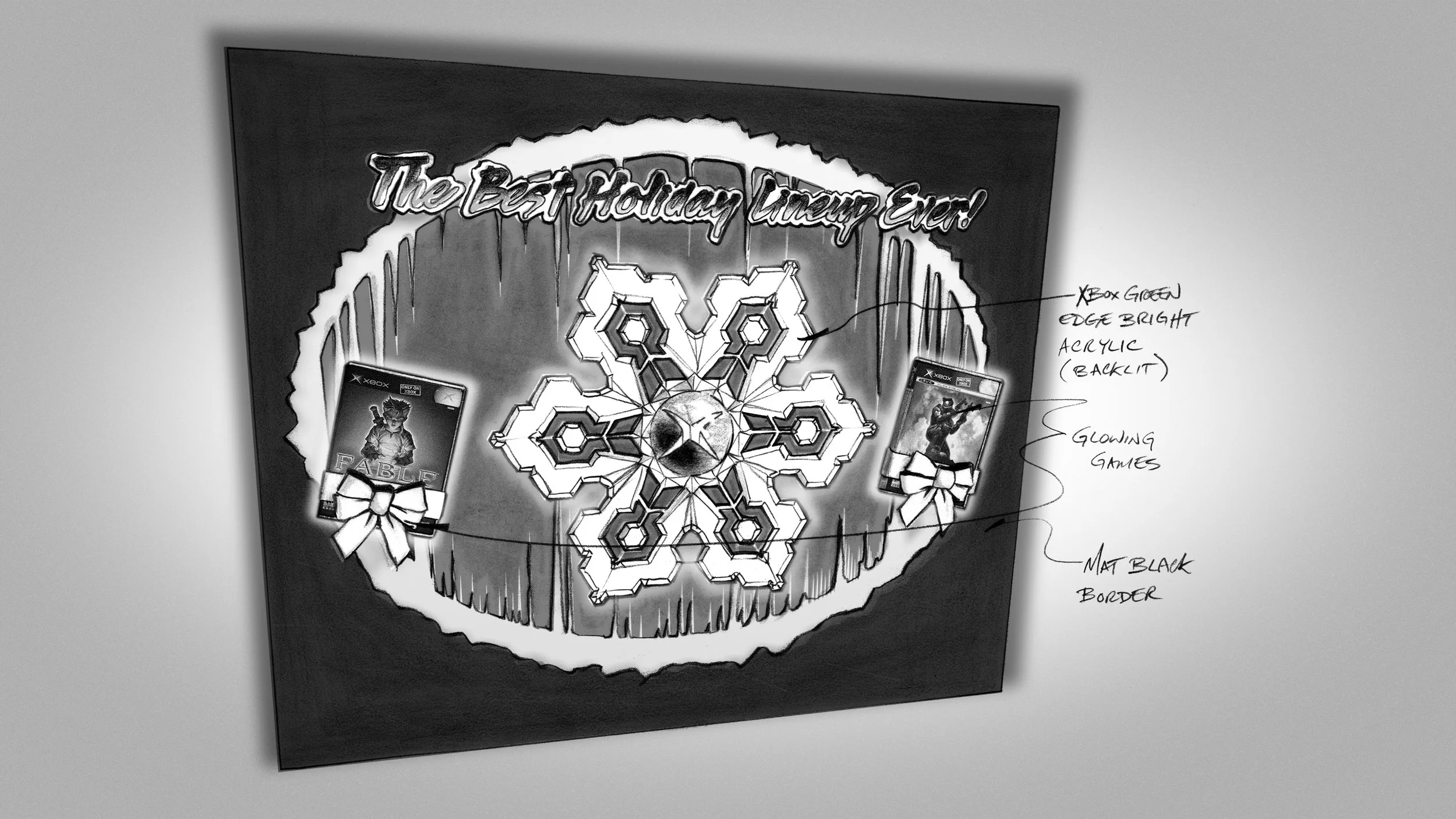
Developed private hospitality and meeting environments within Microsoft's Xbox presence at E3.
The program translated Xbox's innovation-driven identity into a series of immersive physical spaces designed to support executive meetings, media interaction, business partnerships and product demonstrations.
Rather than functioning as isolated rooms within a larger exhibit, the environments were designed as extensions of the Xbox brand experience, combining spatial design, branded architecture and hospitality into cohesive destinations for high-value conversations and interactions.

BUSINESS CHALLENGE
E3 placed Xbox within one of the industry's most visible and highly competitive environments.
While the public-facing exhibit needed to generate excitement around products and the Xbox ecosystem, Microsoft also required private spaces capable of supporting a very different type of experience.
Executives, media, partners and invited guests needed environments where conversations, demonstrations and meetings could take place away from the activity of the show floor without feeling disconnected from the larger Xbox presence.
The challenge was to balance…
…privacy, hospitality, functionality and brand expression within one integrated experience.
STRATEGIC OBJECTIVE
BRAND EXPERIENCE IN SERVICE OF BUSINESS INTERACTION
Create a premium hospitality experience that extended Xbox's brand identity beyond the public exhibit while supporting the business activity taking place behind it.
The environments needed to provide appropriate settings for executive conversations, media engagement, partner meetings and product demonstrations while remaining unmistakably part of the Xbox experience.
The objective was not simply to create attractive rooms.
It was to translate the energy and innovation associated with Xbox into spaces designed around the needs of the people using them.
CUSTOMER EXPERIENCE
The experience was designed around a different visitor journey than the surrounding E3 show floor.
Guests moved from a highly active event environment into more controlled spaces intended for conversation, presentation and focused interaction.
Arrival, orientation, seating, sightlines, technology integration, privacy and brand cues all contributed to the experience.
The environment needed to feel premium without becoming disconnected from Xbox's energetic visual language.
For invited guests, the desired journey was:
Enter > Orient > Engage > Experience > Connect
The result was an environment where the physical setting supported the interaction rather than competing with it.
MERCHANDISING SYSTEM
Although this program was not traditional retail merchandising, the same systems thinking applied.
Architecture, graphics, furniture, technology, product presentation, lighting and circulation needed to work together as components of one physical brand experience.
The environment was developed as an interconnected system including:
Branded Architecture
Structural forms and environmental elements established the physical character of the Xbox experience.
Hospitality Environments
Seating, meeting areas and spatial organization supported different types of conversations and guest interactions.
Environmental Graphics
Brand communication reinforced Xbox identity while helping visually connect the private spaces to the larger exhibit.
Product + Technology Integration
Screens, demonstrations and technology were incorporated into the environment where appropriate rather than appearing as independent additions.
Visitor Journey
Circulation, entry points, sightlines and spatial transitions helped manage movement between public activity and private interaction.
Together, the elements created a…
COHESIVE EXPERIENCE RATHER THAN A COLLECTION OF INDIVIDUAL SPACES
CROSS-FUNCTIONAL LEADERSHIP
The work required translating creative intent into an environment capable of supporting both the Xbox brand and the operational requirements of a major industry event.
I led creative direction, concept development and environmental design while coordinating the requirements influencing space planning, guest experience, brand expression and production.
The process required alignment across creative, experiential, client, engineering, production and event stakeholders.
Design decisions therefore considered more than appearance. They needed to balance spatial experience, branding, technology, guest interaction, fabrication requirements and the realities of installation within a temporary event environment.
This connection between creative direction and execution helped ensure that the experience envisioned during concept development could successfully move into the physical world.
EXECUTION & SCALE
The environments moved from concept development and spatial exploration through visualization, design refinement and production coordination.
Three-dimensional modeling and environmental renderings helped establish scale, circulation, sightlines, architectural relationships, furniture placement and brand integration before fabrication.
The design also needed to respond to the practical requirements of a major experiential program including temporary construction, installation, technology integration, event operations and limited show-floor space.
The result was a coordinated series of environments that could function within the larger Xbox E3 presence while maintaining a consistent visual and experiential language.
PROGRAM IMPACT
The program extended Xbox's brand experience beyond the high-energy public exhibit into spaces designed for some of the event's most important business interactions.
The environments created a cohesive setting for executive meetings, media engagement, partner conversations and product demonstrations while reinforcing Xbox's premium presence within E3.
Rather than treating hospitality as a support function separate from the exhibit, the program made it part of the overall brand experience.
Success Criteria
Extended the Xbox brand experience into private executive and hospitality environments
Created spaces supporting executive meetings, media interaction, partnerships and product demonstrations
Connected architecture, graphics, technology and hospitality into a cohesive physical experience
Balanced premium guest experience with the energy and visual language of the Xbox brand
Integrated private environments within the larger E3 presence without losing brand continuity
Translated creative concepts into environments designed around real-world event, production and operational requirements
EXPERIENCE DESIGN SUPPORTING BRAND, PEOPLE AND BUSINESS
Case Study

Sony Pictures Animation
Extending Entertainment IP Beyond the Screen
Licensed Brand Experience | Retail Activation | Consumer Products | Experiential
INTRODUCTION
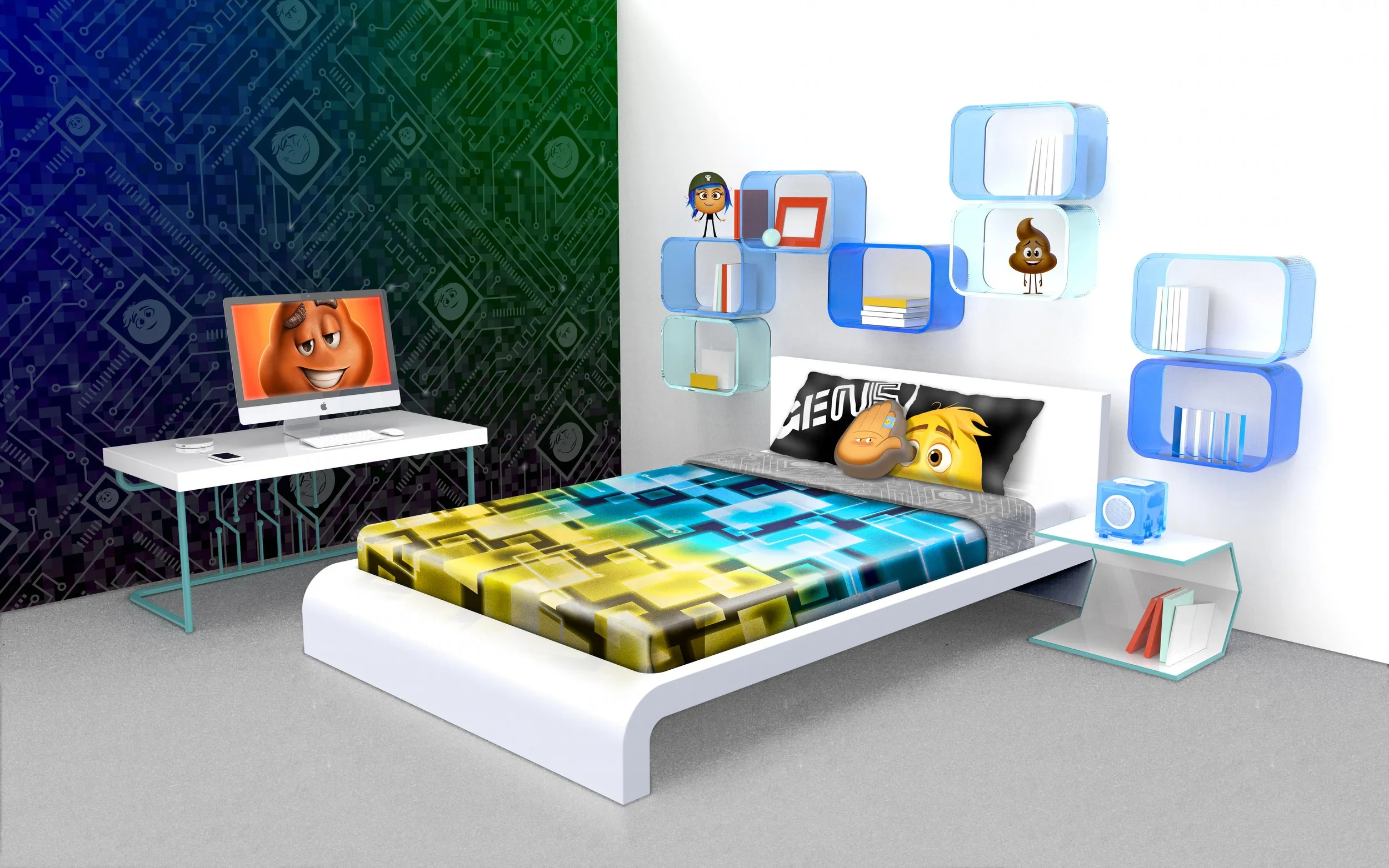
Developed an integrated licensed brand experience program supporting Sony Pictures Animation’s The Emoji Movie across consumer products, retail environments, branded displays and experiential touchpoints.
The program translated a digital-first entertainment property into physical consumer experiences designed to extend the story beyond theatrical marketing and into the places where consumers could discover, interact with and purchase the brand.
Rather than treating products, displays and environments as separate executions, the work connected them into a broader activation ecosystem supporting entertainment, merchandising and commerce.
BUSINESS CHALLENGE
Entertainment properties live primarily through storytelling on screen, while licensed programs must translate that emotional connection into products and physical experiences that can compete for attention in retail.
For The Emoji Movie, the challenge was particularly interesting because the property originated from a visual language consumers already associated with smartphones, messaging and digital interaction.
The opportunity was to transform that familiar digital world into tangible products, merchandising and environments while maintaining recognizable character expression and creating solutions that could function within real-world retail, promotional and production requirements.
STRATEGIC OBJECTIVE
Create a cohesive licensed brand experience that extended The Emoji Movie from theatrical entertainment into consumer products, retail activation and experiential engagement.
The strategy centered on identifying opportunities where the personality, characters and visual language of the property could become part of the product itself rather than simply being applied as decoration.
Products, displays, packaging and environments were developed as interconnected expressions of the same entertainment property, strengthening recognition while creating multiple opportunities for consumers to encounter the brand.
CUSTOMER EXPERIENCE
The physical experience needed to capture the immediate familiarity and personality that made emojis recognizable while giving consumers new ways to engage with the property.
Character integration became an important part of product discovery. Form, graphics, color, expression and functionality worked together to make individual products immediately recognizable as part of The Emoji Movie world.
Experiential elements further extended that relationship by giving consumers opportunities to interact with the brand rather than simply view licensed merchandise.
The result was a more dimensional connection between entertainment storytelling, physical products and the retail experience.
MERCHANDISING SYSTEM
The program extended across multiple elements of the licensed consumer experience including:
Licensed Consumer Products | Retail Displays | Branded Environments | Experiential Activations |
Packaging | Retail Signage
Individual concepts ranged from functional products such as the Charging Station and World Speaker to character-driven merchandise such as the Plushie.
These elements were designed to operate as part of a larger visual system. Character graphics, dimensional forms, packaging, product presentation and environmental communication reinforced one another to create a consistent expression of the property across different consumer touchpoints.
The approach allowed the entertainment IP to move from screen to product to display to environment without losing its core visual identity.
CROSS-FUNCTIONAL LEADERSHIP
Licensed entertainment programs require creative ideas to work within a much larger ecosystem of stakeholders and requirements.
The program connected creative direction and concept development with licensed product development, brand standards, packaging, retail merchandising and production considerations.
This required balancing the creative possibilities of the property with character integrity, product functionality, manufacturing requirements, merchandising objectives and the needs of consumer-facing retail environments.
Working across those disciplines helped ensure that the physical executions remained recognizable as part of The Emoji Movie while also functioning as viable products and retail experiences.
EXECUTION & SCALE
The work moved from creative strategy and concept exploration into product development, visualization, packaging, merchandising and branded environmental applications.
Concepts were developed across different scales and product categories while maintaining a consistent visual relationship to the entertainment property.
The system-based approach provided a framework for extending the brand into additional products, merchandising applications and consumer touchpoints without requiring every execution to be reinvented independently.
This created a more scalable foundation for licensed activation across retail, promotional and experiential environments.
PROGRAM IMPACT
The program demonstrated how entertainment IP could become a broader physical brand experience rather than remaining primarily a theatrical marketing asset.
By connecting licensed products, merchandising, packaging, retail environments and experiential touchpoints, the work expanded the number of ways consumers could encounter and engage with The Emoji Movie.
The integrated approach:
Extended entertainment storytelling into physical consumer experiences
Created greater consistency across licensed products and retail touchpoints
Supported theatrical marketing and licensed consumer product initiatives
Connected entertainment, merchandising and commerce
Created a scalable framework for additional retail activation
Expanded opportunities for consumer discovery beyond the screen
Most importantly, the program illustrates how a recognizable entertainment property can be translated into a coordinated physical ecosystem that connects…
…storytelling, product, retail and consumer experience.
Case Study

M•A•C Cosmetics
Building a Premium Permanent Retail Experience
Prestige Beauty | Permanent Fixtures | Product Presentation | Visual Merchandising
INTRODUCTION
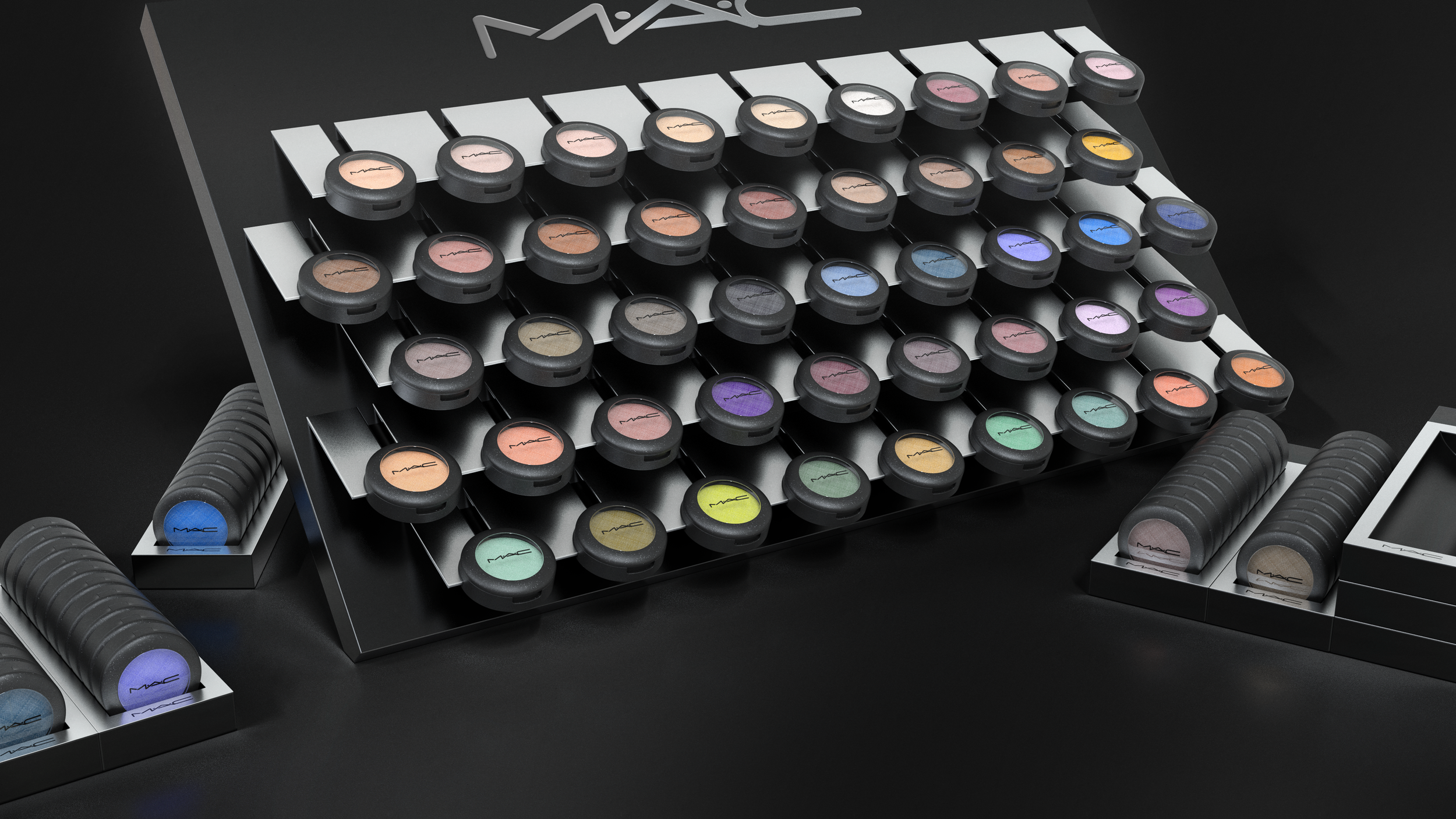
Developed a permanent retail merchandising solution for M•A•C Cosmetics designed to combine premium brand presentation, product interaction and long-term retail functionality.
The program centered on a permanent, reloadable counter display supported by modular product and storage components. Rather than designing for a single promotion or season, the solution translated M•A•C's distinctive brand expression into a physical merchandising system designed for continued use within the retail environment.
BUSINESS CHALLENGE
Prestige beauty merchandising must accomplish several things simultaneously.
The environment needs to communicate a premium brand image while making products highly visible, accessible and easy to explore. At the same time, permanent fixtures must withstand continued customer interaction, product replenishment and changing merchandising requirements without compromising the visual experience.
The challenge was therefore larger than creating an attractive counter display.
The solution needed to balance brand expression, product presentation, customer interaction, durability and operational flexibility within one permanent retail system.
STRATEGIC OBJECTIVE
Create a permanent merchandising architecture capable of maintaining M•A•C's premium visual identity while supporting the everyday realities of beauty retail.
The strategy was to make flexibility part of the physical system rather than relying on completely new fixtures as merchandising requirements evolved.
Permanent Fixture > Modular Components > Product Presentation > Customer Interaction > Replenishment
This created an experience designed to remain visually controlled and recognizable while allowing products and merchandising components to be accessed, reorganized and replenished over time.
CUSTOMER EXPERIENCE
Attract > Explore > Interact > Compare > Select
The customer experience was designed around direct interaction with the product.
Strong M•A•C brand recognition created the initial visual draw while the counter presentation brought products into an organized, accessible environment where customers could explore the assortment more closely.
Product organization and presentation helped maintain visual clarity across a potentially dense cosmetics assortment while keeping the physical experience focused on the products themselves.
The fixture therefore became more than a branded backdrop. It created a controlled environment for product discovery, interaction and selection.
MERCHANDISING SYSTEM
The solution combined several functional components within one coordinated permanent merchandising system.
Permanent Counter Display
The primary fixture established the M•A•C branded destination while organizing products within a compact countertop footprint.
Reloadable Merchandising
The fixture was designed for continued use rather than a single campaign, allowing merchandise to be replenished while maintaining the integrity of the overall presentation.
Modular Magnetic Trays
Removable magnetic trays created flexibility within the system and provided organized storage supporting everyday merchandising requirements.
Product Presentation
Products became the visual focus of the experience with the fixture architecture providing hierarchy, organization and a premium foundation for the assortment.
Together, these components created a...
PERMANENT MERCHANDISING SYSTEM RATHER THAN A SINGLE STATIC DISPLAY
CROSS-FUNCTIONAL LEADERSHIP
I connected the creative intent of the M•A•C retail experience with the structural, functional and production requirements necessary to make the solution work in the physical environment.
That required considering brand expression, product organization, customer access, modularity, materials, finishes, durability, manufacturing and assembly as interconnected parts of the design process.
Creative development and production thinking were therefore addressed together rather than treating engineering and manufacturing as downstream activities.
This concept-to-production approach helped preserve the premium experience while ensuring the solution could function as a permanent merchandising tool in everyday retail use.
EXECUTION & SCALE
The program moved from concept development and visualization through structural development, component design, refinement and production execution.
Particular attention was given to the relationship between the permanent fixture and the modular components supporting product presentation and storage.
The resulting system was designed around repeatability and longevity. Instead of creating a disposable promotional solution, the program established a durable merchandising platform capable of supporting continued product presentation and replenishment.
That distinction allowed the physical investment to extend...
BEYOND A SINGLE CAMPAIGN OR SEASON
PROGRAM IMPACT
The M•A•C Cosmetics program demonstrated how premium brand standards can be translated into a permanent physical merchandising system without sacrificing flexibility or everyday retail functionality.
The solution connected brand expression, product presentation, customer interaction, modular components and production requirements within one cohesive experience.
Rather than approaching permanent merchandising as static retail furniture, the program created a flexible platform designed around both the customer experience and the operational life of the fixture.
Success Criteria
Strengthened premium brand presentation through a distinctive permanent merchandising environment.
Placed product discovery at the center of the experience with an organized and accessible cosmetics presentation.
Built flexibility into the fixture architecture through modular, reloadable merchandising components.
Connected creative and production requirements to create a solution designed for continued real-world retail use.
Extended the value of the retail experience beyond individual campaigns through a durable permanent merchandising system.
Case Study

PepsiCo - MTN DEW KICKSTART
Turning Iconic Packaging Into a Retail Destination
Product Launch | Retail Activation | Shopper Marketing | Experiential Merchandising
INTRODUCTION
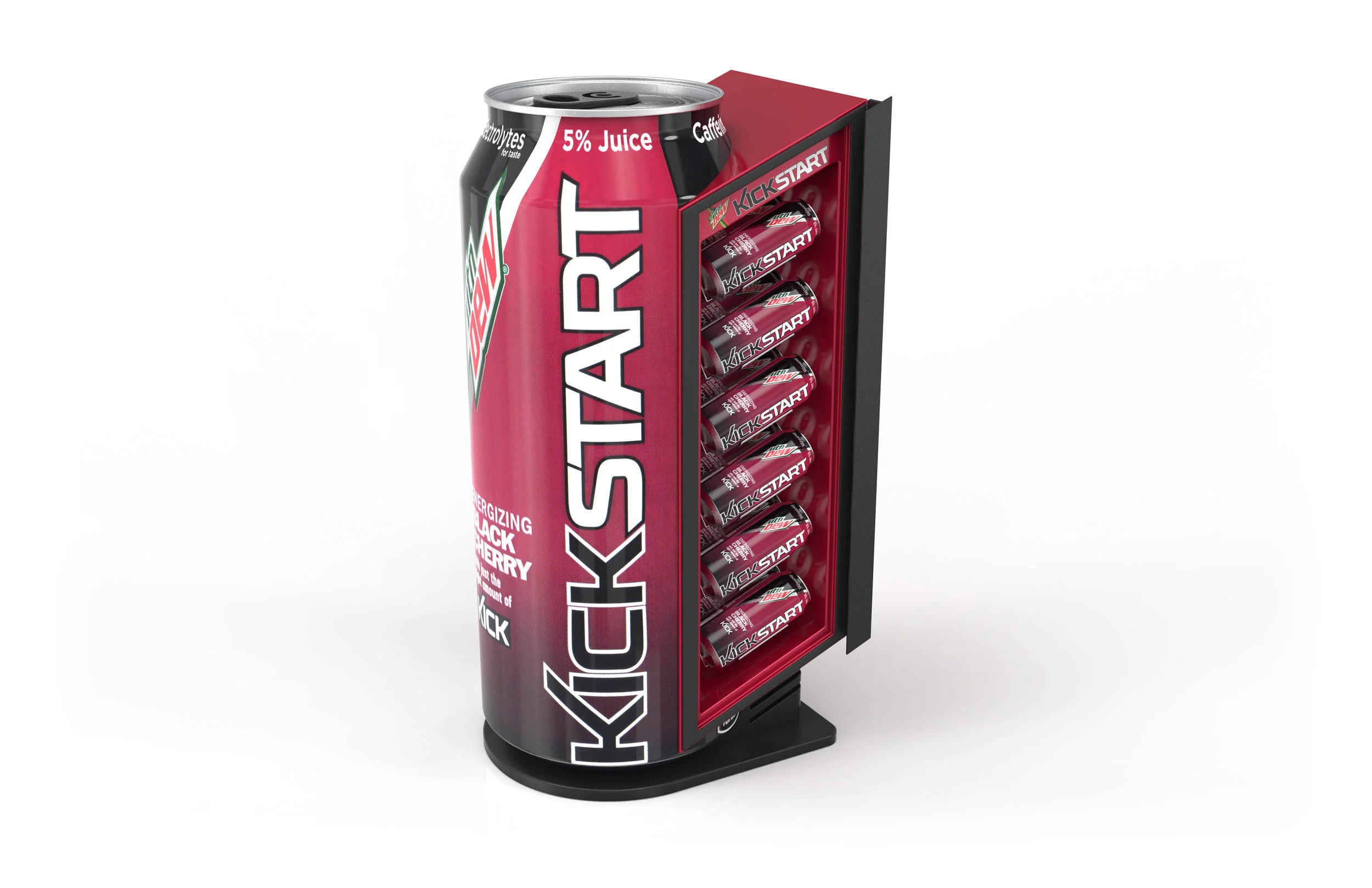
Developed a high-impact retail activation supporting the launch of MTN DEW Kickstart, translating the product's distinctive can architecture into a three-dimensional branded experience.
At the center of the program was a permanent can-shaped cooler designed to make the product immediately recognizable, create a strong visual destination and connect packaging, product and retail experience within a single execution.
The result transformed an everyday merchandising requirement into a physical expression of the brand.
BUSINESS CHALLENGE
Launching a new beverage into a crowded retail environment requires more than product availability.
MTN DEW Kickstart needed to compete for attention against established beverages, promotional messaging and surrounding retail activity while quickly establishing its own visual identity.
The opportunity was to leverage one of the product's strongest recognizable assets, its packaging, and turn it into something customers could identify from across the retail environment.
The challenge was creating that visual impact without losing the functional requirements of a permanent refrigerated merchandising solution.
STRATEGIC OBJECTIVE
Transform MTN DEW Kickstart's packaging equity into a physical retail experience that could support product launch objectives while increasing visibility and product discovery.
Rather than placing branding onto a conventional cooler, the strategy was to make the product itself the architecture of the experience.
The oversized can became both merchandising fixture and brand communication, creating an instantly recognizable visual landmark capable of attracting customers before they reached the product.
CUSTOMER EXPERIENCE
Recognize > Approach > Engage > Discover > Select
The customer experience began at a distance.
The oversized Kickstart silhouette and graphics created immediate brand recognition, helping the display stand apart from conventional rectangular merchandising fixtures.
As customers approached, the three-dimensional form transitioned from brand communication into functional merchandising, placing the actual product directly within the experience.
This created a simple connection between what customers saw, what they recognized and what they could purchase.
MERCHANDISING SYSTEM
The display brought together brand expression, product presentation and permanent fixture requirements within one integrated physical solution.
Packaging Architecture
The recognizable proportions and graphic language of the Kickstart can became the foundation of the fixture.
Product Merchandising
The cooler incorporated refrigerated product directly into the branded structure, connecting visual impact with a practical point of purchase.
Brand Communication
Large-scale graphics extended the packaging identity vertically, creating visibility well beyond the immediate merchandising footprint.
Functional Integration
Cooling components, access, structure and mechanical requirements were incorporated without compromising the simplicity of the exterior brand expression.
The result was more than a branded cooler.
THE PACKAGE BECAME THE RETAIL ENVIRONMENT.
CROSS-FUNCTIONAL LEADERSHIP
Led creative direction and concept development while connecting brand objectives with industrial design, structural development, graphics, engineering and production requirements.
The distinctive form required creative and technical decisions to develop together.
Proportion, graphics, product access, structural requirements, cooling components, manufacturing considerations and serviceability all needed to support the same central idea without weakening the visual simplicity that made the concept powerful.
This integration helped carry the experience from a bold creative idea into a buildable retail solution.
EXECUTION & SCALE
The program moved from concept development and visualization through structural refinement, engineering and production-ready execution.
Maintaining the recognizable Kickstart can form while integrating the functional requirements of a permanent cooler required careful coordination between the visible brand experience and the systems operating behind it.
The completed solution demonstrated how a simple creative idea could be systematically developed into a physical activation capable of performing within real-world retail environments.

PROGRAM IMPACT
The MTN DEW Kickstart program transformed one of the product's most recognizable brand assets into a memorable physical retail experience.
Instead of relying on conventional signage to announce the product launch, the merchandising architecture itself became the communication.
The program:
Created a distinctive retail destination supporting a major product launch
Increased visual presence and strengthened product discovery
Connected packaging, merchandising and shopper engagement within one physical experience
Translated a bold creative concept into a functional permanent retail solution
Demonstrated how recognizable brand assets can become scalable experiential merchandising
Most importantly, the work illustrates a broader principle behind effective physical brand experience: